


In 2026, businesses are increasingly using conversational AI chatbots to streamline customer service through business automation. These tools handle repetitive inquiries like "Where’s my order?" or "What’s your return policy?" – which make up 80% of support tickets – allowing human agents to focus on complex issues. They also work 24/7, manage multiple channels (like email, WhatsApp, and live chat), and escalate cases to agents when needed.
Some of the top options include:
- Quidget: A no-code chatbot that trains in under 3 minutes using your website and FAQs. It supports over 45 languages and integrates with tools like Calendly, Zendesk, and Shopify. Plans start at $79/month.
- Intercom: Best for SaaS companies, it uses OpenAI-powered chat to handle complex queries. Pricing starts at $29/seat per month, plus $0.99 per resolved inquiry.
- Tidio: A simple, affordable live chat solution aimed at small businesses. It combines basic AI with lead-generation features.
- Zendesk: Ideal for mid-to-large teams already using Zendesk, it offers AI tools for automation and smooth agent handoffs. Starts at $19/agent per month.
- Freshdesk/Freshchat: Combines ticket management with AI-powered chat, perfect for larger teams using the Freshworks suite.
- Gorgias: Tailored for ecommerce, it integrates with Shopify to manage order-related inquiries directly in the chat interface.
- Ada: Built for enterprises, it handles massive volumes of interactions with advanced AI and back-office integration. Pricing is custom.
Quick Comparison
| Tool | Best For | Starting Price | Key Feature |
|---|---|---|---|
| Quidget | Growing businesses | $79/month | No-code setup in under 3 minutes |
| Intercom | SaaS companies | $29/seat/month | OpenAI-powered chatbot for complex queries |
| Tidio | Small businesses | Free/$19/month | Affordable live chat with basic AI |
| Zendesk | Mid-to-large teams | $19/agent/month | AI tools integrated with Zendesk suite |
| Freshdesk/Freshchat | Freshworks users | $15/agent/month | Combines ticketing with AI chat |
| Gorgias | Ecommerce (Shopify) | $10/month | Order management in chat interface |
| Ada | Enterprises | Custom | High-volume AI with back-end integration |
Each platform has strengths depending on your goals, ticket volume, and tech stack. For a fast, user-friendly solution, Quidget is a standout option for automating repetitive tasks while keeping human agents involved.
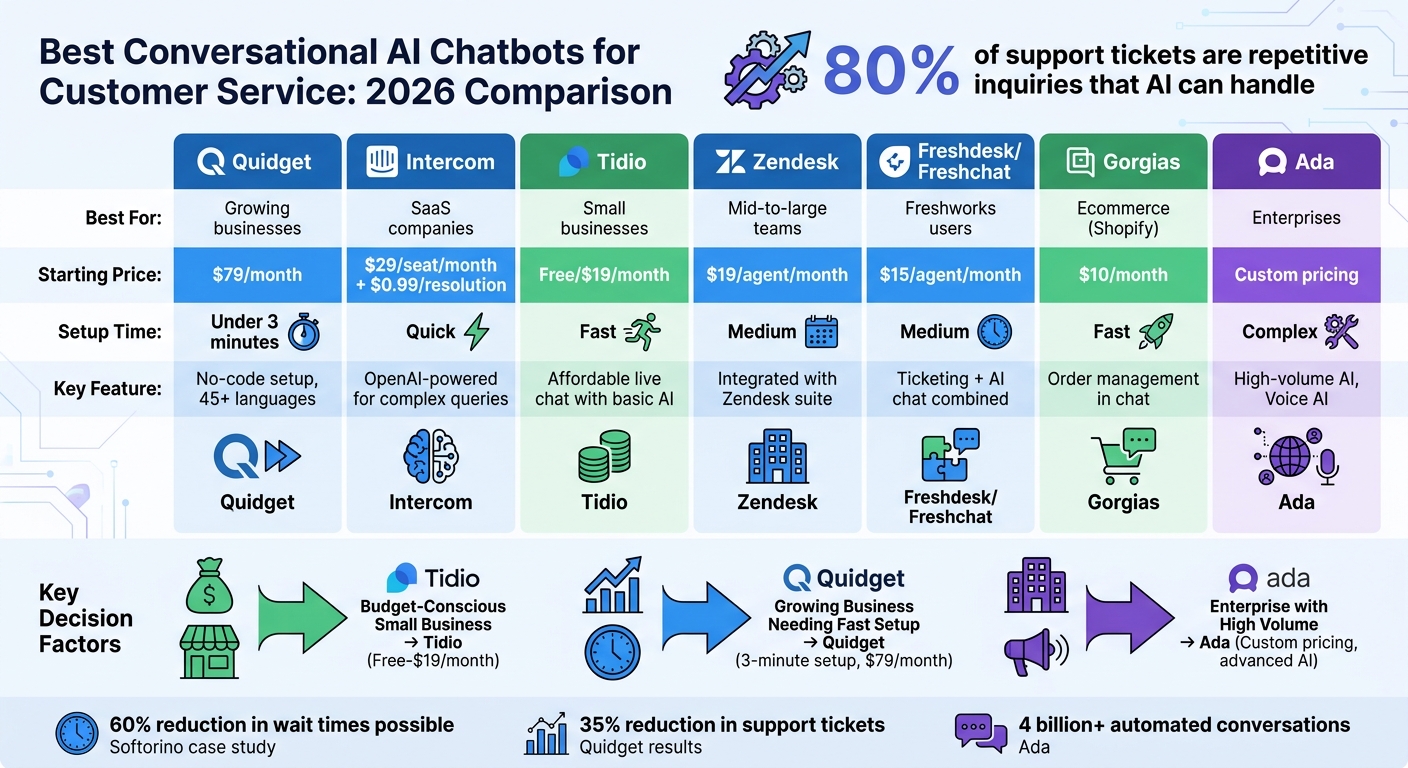
Conversational AI Chatbot Comparison: Features, Pricing & Best Use Cases 2026
AI Chatbots in Customer Service: Best Practices for Better Customer Support
sbb-itb-58cc2bf
1. Quidget
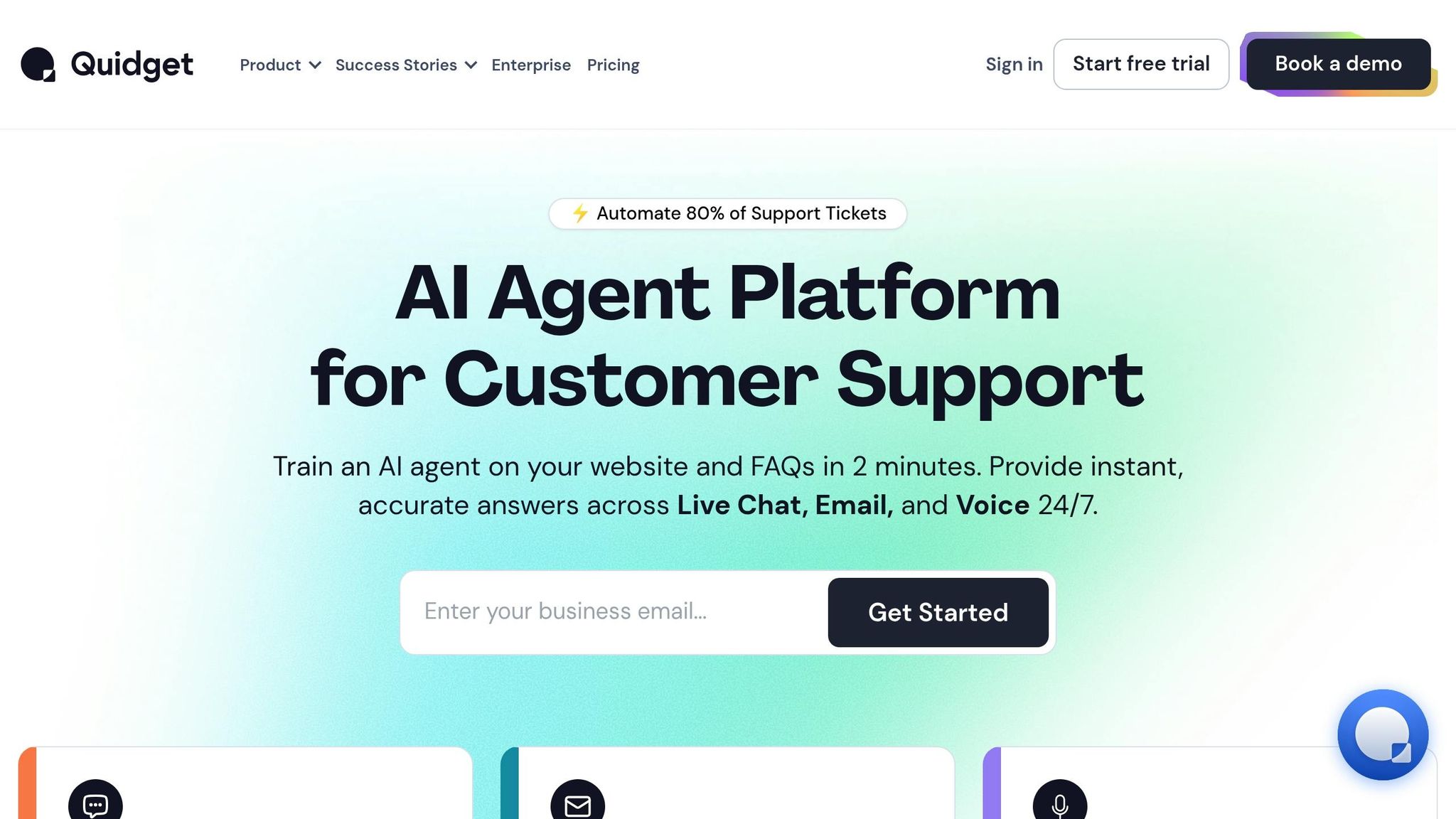
Quidget is an AI-driven platform designed to help growing businesses automate repetitive customer service and sales conversations, all while keeping human teams at the core. Created by SupportYourApp – a company with over 14 years of experience in customer support and a client base of more than 250 global brands – Quidget is built to simplify and speed up customer interactions.
One of Quidget’s standout features is its rapid, no-code deployment. You can launch a fully trained AI agent in less than three minutes by uploading FAQs, documents, or simply providing your website URL. The AI then trains itself using your unique company content, including help center articles, product details, pricing, and policies. This quick setup makes it easy to automate customer support and sales tasks without a lengthy onboarding process.
The platform can handle up to 80% of routine inquiries, such as questions about order statuses or return policies. For more complex issues or when the AI is uncertain, it automatically escalates the conversation to a human agent through your existing helpdesk or built-in live chat. It even includes the full conversation history, so customers don’t have to repeat themselves.
"We trained our bot in just a few minutes – we couldn’t believe how fast it was! It made a huge difference during our sales campaigns, cutting waiting times by 60% and boosting customer satisfaction." – Alex, Customer Success Manager at Softorino
Quidget isn’t just for customer support – it also assists with sales and lead qualification. It can engage prospects, collect contact details, sync with CRMs, and even schedule meetings via Calendly. With support for over 45 languages, it’s a practical solution for businesses serving diverse or international audiences.
Best For
Quidget is ideal for businesses managing high volumes of repetitive inquiries. Whether you’re an ecommerce brand, a SaaS company, or a service provider, this platform can streamline support and sales processes across multiple channels. It’s especially valuable for teams looking to combine these functions into a single platform.
For businesses without engineering resources, Quidget’s no-code setup is a game-changer. You can deploy a trained AI agent in minutes and start reducing ticket volumes right away. Some users have reported impressive results, like a 35% drop in support tickets and up to a 39x return on investment.
Key Strengths
- Multichannel Support: Use the same AI agent across websites, email, and messaging platforms (details in the Multichannel Support section below).
- Continuous Learning: The AI adapts and improves over time by learning from your company’s data and customer interactions, rather than relying on generic scripts.
- Data Security: Quidget is GDPR and ISO compliant, with end-to-end encryption to protect sensitive business and customer information.
Considerations
Quidget works best for businesses ready to automate a significant portion of their customer interactions. If your ticket volume is low, you might see less immediate benefit. Additionally, the platform performs most effectively when trained on well-organized documentation or FAQs.
Advanced features like white-labeling (removing the “Powered by Quidget” branding) are available on higher-tier plans starting at $210/month (Pro Plus). For most growing businesses, the Pro plan at $79/month offers a solid starting point with standard branding.
Multichannel Support
Quidget’s versatility shines through its ability to integrate with a wide range of platforms, ensuring consistent customer engagement. It works seamlessly with website platforms like WordPress, Shopify, Wix, Webflow, Squarespace, Framer, and Bubble. It also supports messaging apps such as WhatsApp, Telegram, Facebook Messenger, Instagram, and Viber, along with internal tools like Slack and email.
For businesses using helpdesks like Zendesk, Freshdesk, and Freshchat, Quidget enables automatic ticket creation and synchronized chat histories. Ecommerce integrations with Shopify and WooCommerce allow real-time order updates. The platform also connects with Calendly for scheduling, supports Zapier for custom workflows, and offers API access for more advanced integrations.
2. Intercom
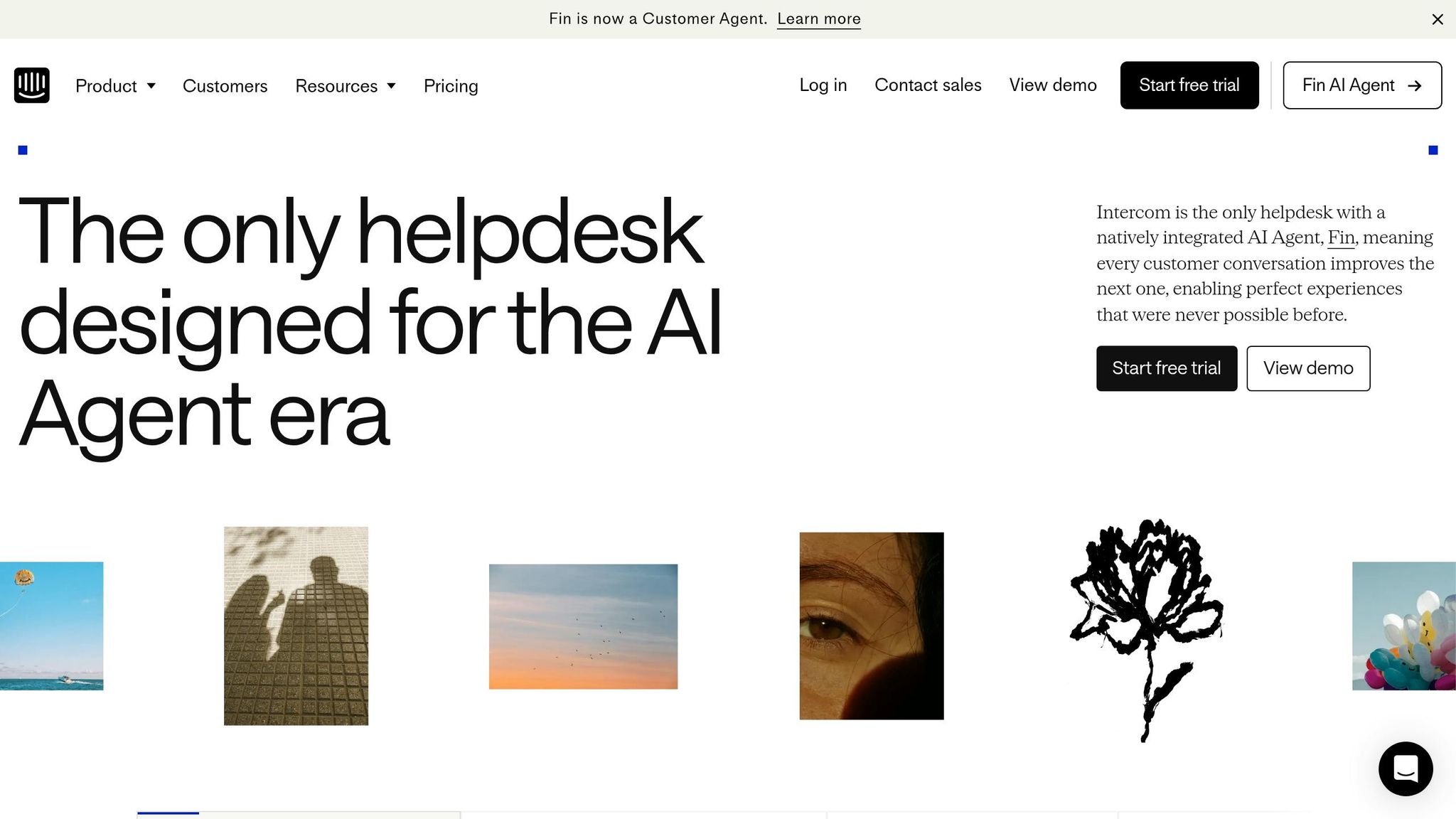
Intercom is a customer service platform designed to handle complex product inquiries and streamline user onboarding. Its Fin AI chatbot, powered by OpenAI, is trained exclusively on a company’s support documentation and knowledge base. This focus helps minimize the risk of inaccurate responses. Unlike traditional rule-based bots, Fin engages in follow-up questions to better understand customer needs and explains intricate topics in a conversational style.
Best For
Intercom shines in delivering tailored support for specific scenarios. It’s particularly effective for SaaS companies dealing with intricate product requirements. The platform is ideal for onboarding new users, reducing churn through proactive in-app guidance, and addressing advanced, context-aware queries. Additionally, its AI Copilot feature supports human agents in real time, making it a great choice for teams managing challenging conversations.
Key Strengths
One of Intercom’s standout features is its quick setup. By connecting your knowledge base, you can start automating conversations almost immediately. Users often highlight its user-friendly interface and efficient task management. The platform also supports proactive in-app engagement, which can help improve customer retention.
These features position Intercom as a strong contender among top customer service platforms, as detailed in the comparison below.
Considerations
Intercom’s pricing model may be a concern for businesses with high support volumes. Plans begin at $29 per seat per month (billed annually), with an additional $0.99 fee for each successful AI resolution. For companies managing thousands of tickets monthly, these costs can add up quickly. Moreover, advanced features like the AI Copilot may require purchasing extra add-ons. A 14-day free trial is available for testing.
Multichannel Support
Intercom extends its functionality across various channels, integrating AI capabilities into messaging platforms, help centers, and live chat. When the AI cannot resolve an issue, it seamlessly transfers the conversation to a human agent, ensuring smooth handoffs for teams relying on Intercom as their primary helpdesk.
3. Tidio
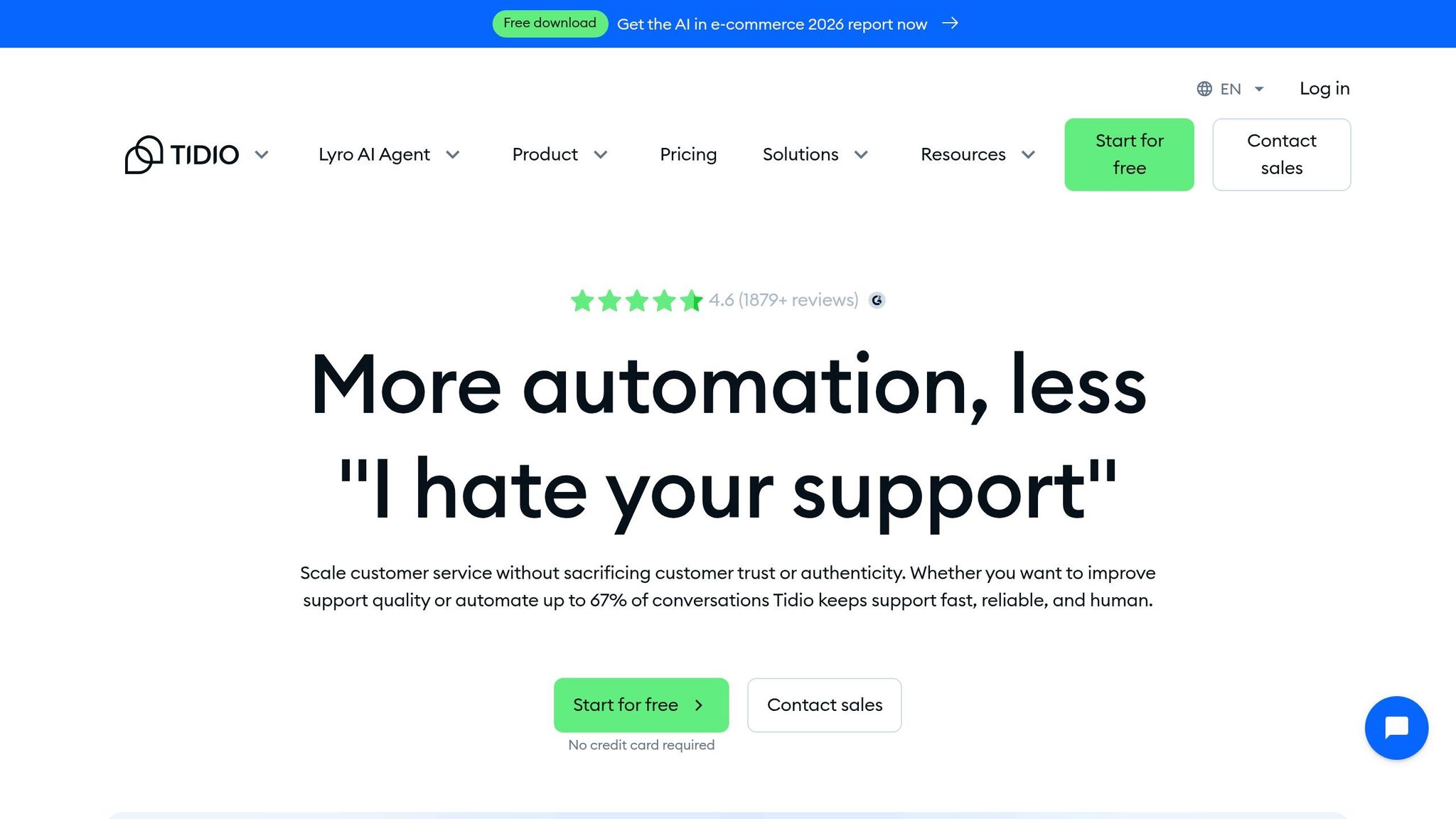
Tidio is a customer service platform that blends live chat with AI-driven automation. It’s tailored for small and mid-sized businesses aiming to engage website visitors and turn them into customers. Known for its simplicity and quick setup, Tidio is a great choice for teams without a technical background. Its AI chatbot tackles routine customer inquiries, while the live chat feature allows teams to capture leads and deliver real-time support.
Let’s dive into who benefits most from Tidio, along with its standout features and things to keep in mind.
Best For
Tidio is a great fit for ecommerce businesses and smaller companies that want to combine customer support with lead generation. It’s especially handy for businesses that need to collect visitor email addresses via chat and track user behavior over multiple sessions. In fact, a survey from Tidio reveals that 60% of business owners believe chatbots enhance the customer experience.
Key Strengths
Tidio stands out with features like automated language detection, which adjusts to a visitor’s preferred language, and state-management capabilities that remember if a chat window was minimized or closed. Additionally, the platform assigns unique user IDs to track visitors across sessions. This ensures teams can maintain consistent conversations, even when users return to the site later.
These features highlight Tidio’s focus on efficiency, though it’s important for smaller teams to weigh its limitations as well.
Considerations
Tidio’s intuitive design and straightforward setup make it an excellent choice for small businesses looking for an easy-to-use solution. However, teams should evaluate whether its capabilities fully meet their specific needs.
4. Zendesk
Zendesk is a customer service platform designed for mid-size to enterprise teams, offering a mix of AI automation and human agent workflows in a single workspace. It serves as the backbone for support operations, bridging AI capabilities with human expertise.
Best For
Zendesk is ideal for enterprise-level and growing support teams managing high ticket volumes across multiple channels. It’s especially useful for companies aiming to automate up to 80% of routine inquiries through AI-driven customer self-service – like pricing questions, shipping updates, or basic troubleshooting – while keeping human agents available for more complex issues. Businesses with global operations also benefit from its multilingual support features. This combination makes Zendesk a strong choice for organizations seeking efficient automation paired with human oversight.
Key Strengths
Zendesk shines in ensuring smooth transitions between AI and human agents. If an AI agent encounters a question it can’t resolve, it compiles the entire chat history for the human agent, so customers don’t have to repeat themselves. This approach minimizes frustration and keeps the experience seamless during escalations.
The platform’s no-code flow builder allows administrators to design multi-step workflows without needing programming skills. Its AI-powered triage system categorizes and prioritizes tickets based on customer intent and sentiment. Additionally, the Agent Copilot feature suggests real-time responses to human agents during live interactions. AI agents can also be deployed quickly by connecting them to an existing knowledge base, eliminating the need for manual scripting.
Zendesk centralizes interactions from various channels – including websites, WhatsApp, Telegram, Facebook Messenger, email, and social media – into a single workspace. It also integrates with tools like Slack, Shopify, Jira, and Salesforce, making it easier to connect AI systems with e-commerce platforms without requiring extensive technical resources.
While these strengths boost efficiency, pricing and customization options may vary depending on the subscription tier.
Considerations
Zendesk’s pricing starts at $19 per agent, per month (billed annually), and includes a 14-day free trial. However, advanced AI features are typically locked behind higher-tier plans, which can increase costs as your team grows. Additionally, customization options for chatbots may be limited on lower-tier plans, though the platform excels in scalability and integration for larger operations. With an aggregated rating of 4.3/5 from user reviews, Zendesk is often praised for its no-code automation builder, though some users note restrictions in features for lower-tier plans.
5. Freshdesk/Freshchat
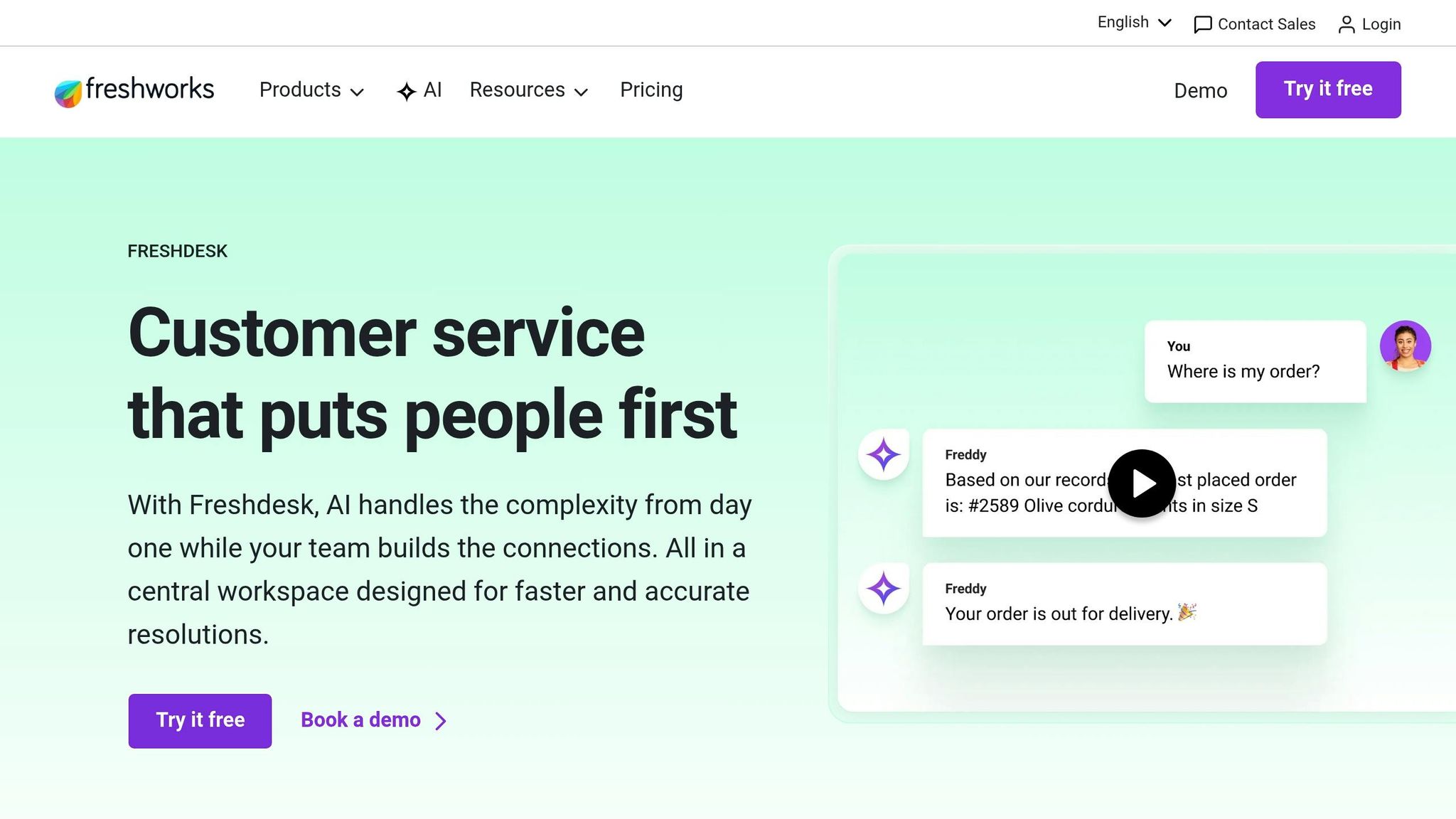
Freshdesk and Freshchat combine ticket management with real-time messaging, simplifying customer support. This combination aligns with the growing use of conversational AI in support and sales, much like platforms such as Quidget.
Best For
These tools work well for teams managing large volumes of routine inquiries – like questions about product details, pricing, or shipping. AI handles about 80% of repetitive tasks, leaving human agents to focus on more complicated issues. Companies that want to avoid frustrating customers with automation benefit from the smooth handoff features these platforms offer.
Key Strengths
One standout feature is how easily conversations transition from AI to human agents. If the AI can’t confidently respond, the entire conversation history is transferred to a live agent without requiring the customer to repeat themselves. This ensures a smoother experience during escalations, reducing frustration.
Freshdesk quickly routes escalated issues to team members, providing them with all the necessary context. Freshchat, on the other hand, focuses on real-time messaging across various customer channels. Together, they strike a balance: AI handles repetitive tasks, while human agents are equipped with detailed case histories for more complex situations. Additionally, these platforms excel in offering multichannel support.
Multichannel Support
Freshdesk and Freshchat centralize communications across multiple channels, streamlining workflows. Freshdesk supports live chat and email from one interface. When paired with AI, they also integrate with popular messaging apps like WhatsApp, Telegram, Facebook Messenger, and Slack. This consolidation reduces the hassle of juggling multiple tools. AI integrations further enhance functionality by enabling 24/7 support in over 45 languages, making them a strong choice for businesses with a global reach.
Considerations
These platforms shine when paired with AI agents that filter routine inquiries. Setting up escalation rules ensures that uncertain AI responses are routed to live agents with the conversation history intact. This setup allows teams to handle all inquiries from one central location while AI takes care of repetitive tasks, improving customer satisfaction and minimizing friction during escalations.
6. Gorgias
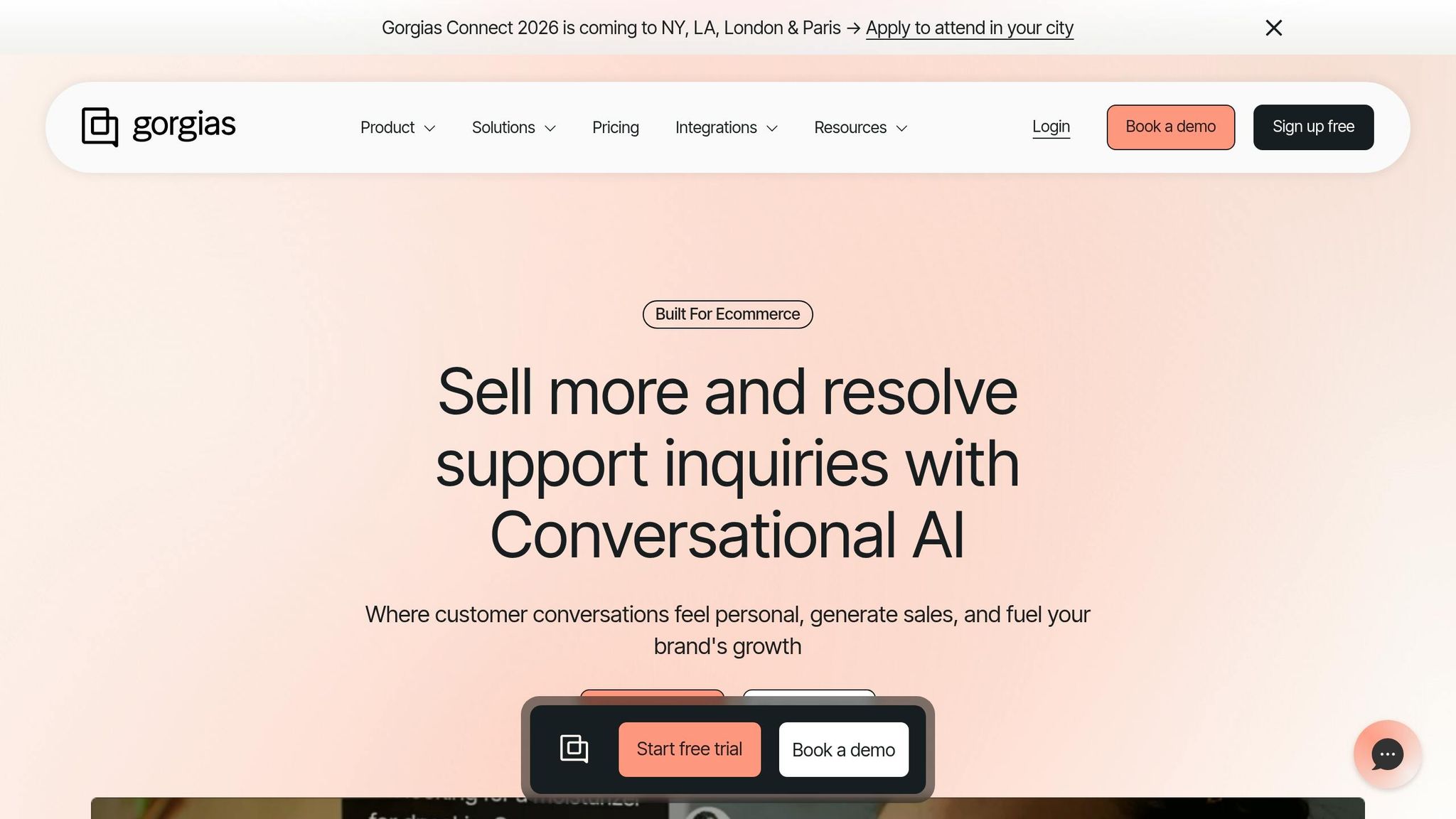
Gorgias takes a more focused approach compared to broader customer service tools. It’s specifically tailored for e-commerce businesses, seamlessly combining customer conversations with order management. Built for platforms like Shopify, BigCommerce, and Magento, it’s designed to meet the unique needs of online retailers.
Best For
Gorgias is ideal for online stores that handle a high volume of order-related inquiries. If your team frequently answers questions like “Where is my order?” or manages returns, Gorgias simplifies the process by integrating customer data and order details directly into the conversation interface.
Key Strengths
One of Gorgias’s standout features is its tight integration with Shopify. Support agents can access complete order histories, make order adjustments, and even process refunds – all within the chat window. This eliminates the hassle of switching between multiple systems, saving time and reducing errors.
The platform also uses AI-powered intent detection to sort incoming tickets automatically. It recognizes common patterns, such as “Where is my order?” or “I received a damaged item,” and categorizes them accordingly. Additionally, it analyzes customer sentiment, allowing teams to prioritize frustrated or urgent cases. These features reduce manual work and help ensure inquiries are routed to the right agent quickly.
While its integrations and features boost efficiency, it’s important to evaluate whether Gorgias’s specialized focus aligns with your business needs.
Considerations
Gorgias is most effective for businesses operating on e-commerce platforms it supports. For teams managing tasks like order adjustments, shipping inquiries, and product-related questions, the platform’s consolidated workspace is a game-changer. However, its specialization in e-commerce makes it less suitable for non-retail businesses or those requiring more generalized customer service automation.
7. Ada
Ada is built for enterprises aiming to automate massive volumes of customer interactions to improve customer self-service. Its focus is on handling repetitive inquiries across support, sales, and marketing, making it a go-to solution for high-volume operations.
Best For
Ada is ideal for large organizations that need seamless integration with back-office systems. This allows for full automation of transactional tasks, eliminating the need for human intervention in many cases.
Key Strengths
Ada leverages advanced language models from OpenAI, Anthropic, and Google Gemini, showcasing its ability to handle enterprise-scale operations. With over 4 billion automated conversations under its belt, it’s clear this platform is built for high-demand environments.
Some standout features include:
- Enterprise-grade customization: Businesses can design sophisticated AI agents tailored to their unique workflows.
- E-commerce integration: For Shopify users, Ada can automate tasks like providing shipping updates and order-specific details.
- Proprietary safety checks: These ensure interactions are validated and smoothly transitioned to human support when necessary.
- Multichannel deployment: The platform supports various channels, including Voice AI for phone-based customer service.
These features highlight Ada’s ability to meet the demands of large-scale customer service operations.
Considerations
Ada’s setup process can be more complex compared to simpler, self-service solutions. Additionally, pricing details are not publicly available – interested businesses need to contact Ada directly for a quote. Organizations should carefully evaluate whether their customer interaction volume justifies the investment in this enterprise-level solution.
Comparison Summary
Each conversational AI chatbot addresses different business needs, making them suitable for specific priorities. Quidget is known for its quick, no-code setup – taking less than 3 minutes – and its ability to automate up to 80% of routine inquiries. It integrates seamlessly with helpdesk tools like Zendesk and Freshdesk, efficiently managing repetitive queries while leaving complex issues for human agents.
Intercom is a great choice for businesses looking for a full customer engagement platform with CRM integration. Tidio appeals to small businesses needing an affordable live chat solution with basic AI features. Zendesk is ideal for companies already using its ticketing system, offering an easy way to add AI capabilities. Similarly, Freshdesk/Freshchat works well for teams aligned with the Freshworks suite, providing a unified experience.
Gorgias is tailored for ecommerce brands using Shopify, offering robust order management and customer data integrations. On the other hand, Ada caters to large enterprises with high interaction volumes, delivering advanced language models, Voice AI, and back-office integration. However, Ada requires a more complex setup and custom pricing.
Here’s a quick side-by-side comparison of their strengths and considerations:
| Tool | Best For | Key Strengths | Considerations |
|---|---|---|---|
| Quidget | AI support and sales automation | Quick setup, AI-powered answers, human handoff, website chat, email support, lead qualification | Best for businesses ready to automate repetitive conversations |
| Intercom | Full customer engagement platform | Comprehensive helpdesk and CRM integration | Higher pricing; may feel complex for support-focused teams |
| Tidio | Small businesses needing live chat | Low cost, user-friendly interface, basic AI chatbot features | Limited AI functionality compared to more advanced platforms |
| Zendesk | Existing Zendesk users | Strong integration within the Zendesk ecosystem, detailed reporting | Best suited for current Zendesk customers; could be costly for new users |
| Freshdesk/Freshchat | Freshworks suite users | Unified helpdesk and chat with CRM integration | Most effective when fully integrated with the Freshworks suite |
| Gorgias | Shopify-based ecommerce brands | Shopify-specific features and order management automation | Primarily designed for ecommerce; less relevant for other industries |
| Ada | Large enterprises with heavy interactions | Advanced language models, Voice AI, back-office integration | Complex setup, custom pricing, and requires enterprise-scale interaction volumes to be cost-effective |
Conclusion
Selecting the right conversational AI chatbot boils down to your business goals, current tech stack, and the types of conversations you aim to automate. When it comes to customer service, Quidget offers a solid solution that balances automation with the essential involvement of human agents.
Quidget simplifies setup with its no-code approach, handling routine inquiries efficiently while leaving complex cases to human oversight. It’s a great fit for growing businesses, ecommerce brands, SaaS companies, and service teams needing multichannel support – whether it’s website chat, email, WhatsApp, or other messaging apps.
That said, different platforms cater to specific needs. Intercom provides robust engagement tools with CRM integration. Tidio is a budget-friendly option for small teams seeking live chat. For companies already using platforms like Zendesk or Freshdesk/Freshchat, those tools integrate seamlessly. Shopify-based ecommerce brands might lean toward Gorgias for order management automation, while Ada is geared for large enterprises handling high interaction volumes and complex workflows.
Quidget stands out with its ability to train on your FAQs, documents, and website content in under three minutes, supporting over 45 languages. Businesses like Softorino have seen tangible results, including a 35% reduction in support tickets and a 60% decrease in customer wait times after adopting Quidget.
Want to see how Quidget can transform your customer service? Try it for free or schedule a demo today.


